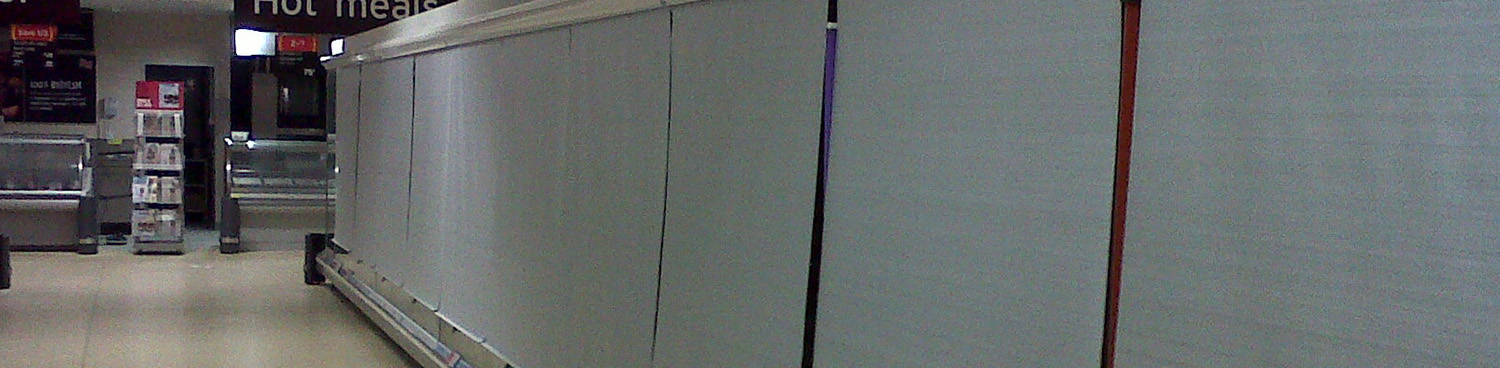
Cutting Down on Perishable Losses During Power Outages
June 25, 2026
Power outages are more common nowadays, with 45% of utility customers experiencing power cuts in 2025. Extreme weather was the culprit in 48% of cases, with others caused by an increase in power demand.
For supermarket and grocery store managers, a power outage is more than just a technical issue. It's a race against time. Sensitive perishables are quickly exposed to ambient heat when the air curtain of an open-case refrigerator fails, disrupting the thermal equilibrium.
Backup generators don’t usually cover refrigerated displays. Food stays fresher for longer thanks to humidity systems that create evaporative cooling and night covers that serve as an additional buffer during a power outage. Continue reading to learn how to minimize perishable loss when the power goes out and how night covers can be useful.
Temperature Rise Risks During Outages
The moment fans stop, cold air, which is denser than warm air, begins to seep out of open display cases and is replaced by the store’s ambient heat. As the cold air drains away, it creates a subtle vacuum that pulls the store’s warm, humid air down into the case. This rapid shift in temperature exposes sensitive food items to two different vectors of destruction:
- Bacterial Acceleration: Perishables entering the "Danger Zone" (40°F to 140°F) can experience accelerated microbial growth, with bacterial counts doubling every 20 minutes.
- Cellular Breakdown: Produce loses structural integrity as respiration rates spike in response to rising heat.
According to the FDA, refrigerated food is generally only safe for 4 hours during a power outage if the doors remain closed; open-display cases fail much faster.
How Night Covers Keep Food Safe
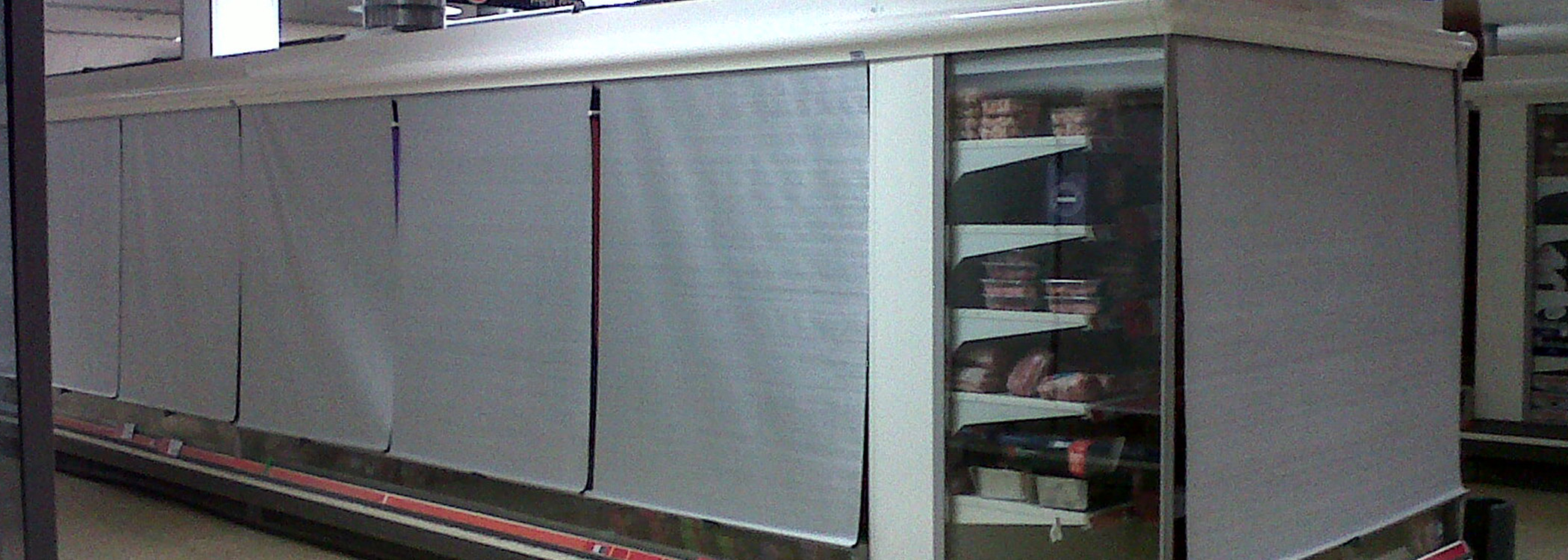
Night covers reduce heat infiltration. When an outage strikes, your staff cannot realistically move hundreds of pounds of produce and proteins into backroom walk-ins before the Danger Zone sets in. Instead, you must bring the barrier to the product.
Woven aluminum night covers act as a physical shield, transforming an open, vulnerable display into a semi-sealed environment that traps existing cold air. These retrofitted thermal barriers combat three main risks of temperature imbalance:
1. Radiant Heat Barriers Block Ambient Heat
The first risk is ambient heat entering the display case. Standard clear plastic or fabric sheets do little to prevent radiant heat, such as from store lighting and warm ceiling air, from entering the display case. A high-quality woven aluminum cover radiates the external heat away from the food display shelves.
2. Convection Control Prevents Cold Air from Escaping
The second risk is cold air escaping the case. In an open case, ambient store drafts create a destructive cycle known as the "chimney effect," where warm air pulls cold air out of the case. Deploying a physical cover completely seals off these drafts, eliminating convective heat transfer.
3. Night Covers Extend the Window of Protection
Keeping the temperature consistent during power outages is a challenge. Without a proper cover, there is no way of isolating the internal temperature without power. The strategic use of night covers can extend the safety period of frozen and chilled goods by several hours.
Humidity’s Role in Retaining Freshness
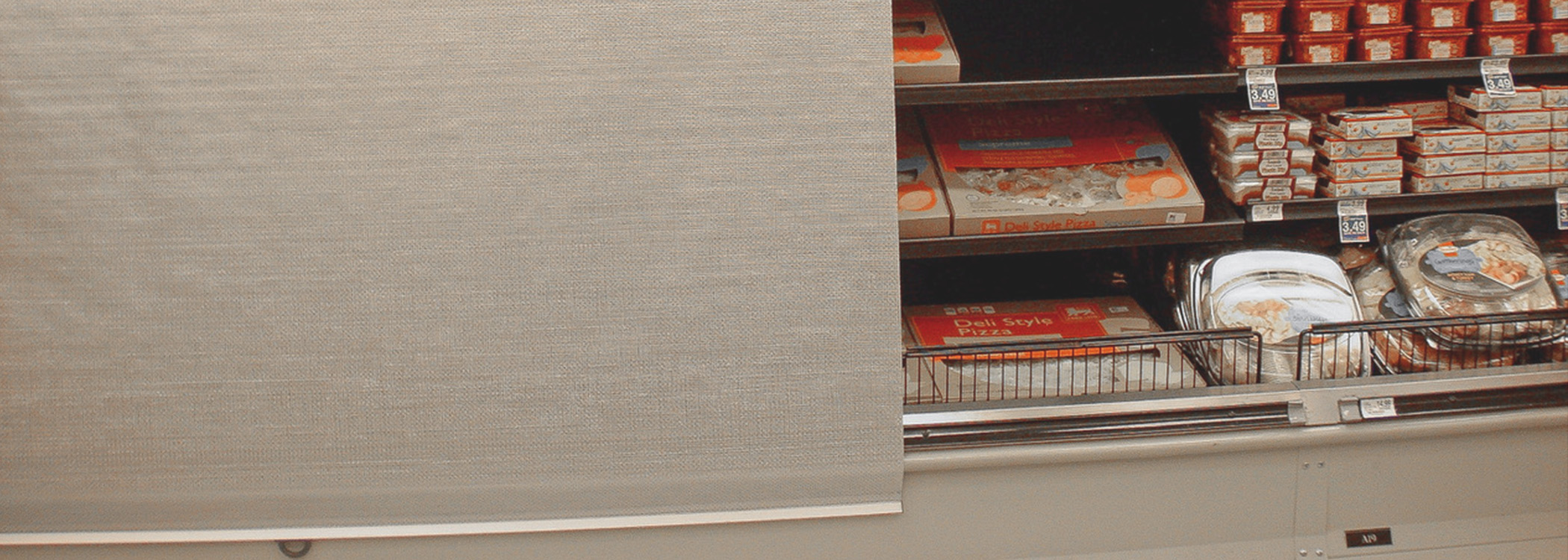
Keeping the air cold is half the battle. Temperature alone does not determine the visual and structural marketability of produce during a crisis; moisture levels also play a crucial role. For example, if the air around your leafy greens is dry, they will wilt long before they spoil.
- Evaporative Cooling: When humidity levels are kept high through fogging, the rate of evaporation from the surface of the food slows down. In a power outage, high relative humidity forces the ambient moisture to act as a thermal buffer. Any ambient heat that enters the case is first absorbed by the water vapor in the air, rather than being transferred directly into the core temperature of your produce.
- Vapor Pressure Deficit (VPD): VPD is the difference between the amount of moisture inside the plant tissue and the amount of moisture in the surrounding air. When the power goes out and the air warms up, the air’s capacity to hold water increases, drawing moisture out of the plant cells. Ambient humidity, such as from a fogging system, helps prevent wilting by reducing the pressure that pushes water out of plant tissue.
- High humidity also slows down the rate at which high temperatures produce "sweat" moisture on the plant tissues, thereby maintaining a lower core temperature. Research indicates that maintaining high humidity can reduce weight loss in leafy greens by 20% to 50%, thereby significantly preserving visual appeal even after thermal stress.
Planning for Emergencies with Prodew
Preparation is the ultimate difference between a minor inconvenience and a total inventory write-off. When power fails, a truly resilient strategy relies on the immediate physical protection of the product. By implementing robust protocol training, you ensure that staff members are ready to deploy Prodew Night Covers the moment power is lost. This immediate action effectively "locks in" the existing cold air and creates a thermal vault, preventing the rapid heat infiltration that typically occurs the second the refrigeration fans stop spinning.
An example of outage protocol would be as follows:
Emergency outage protocol |
|---|
Stage 1:0–5 minutes
|
Stage 2: 5–15 minutes
|
Stage 3: 15+ minutes
|
When There’s a Power Outage, Trust Prodew to Keep your Product Fresh
When there is no power, the fogging and humidity system will not work. The only option to keep your product fresh is to pull down the night covers. Trust Prodew night cover solutions to help save your inventory.
Interested in learning more? Contact a Prodew specialist today.
If you found this article helpful please share it with your social media channels.
About
Prodew is the leading manufacturer of perishable control equipment for supermarkets and food storage facilities.
We offer misting systems for fruit, vegetable and seafood displays, as well as display case humidity systems for produce, meat, seafood, mushroom, delicatessen and flower displays.
Prodew has over 30 years of experience in the design, manufacturing and sales of misting and humidity equipment for the retail and post-harvest industries. We are dedicated to manufacturing the highest quality products at the most competitive prices.
We control more than 80% of the market share in the USA and is the world-leader in the produce misting industry. Look below to discover how we can help your company extend the shelf life of your perishables and maintain the freshness of your products.

Products
Misting
Humidification
Night Covers
Ice Melting
Water Solutions
Industries
Retail
Storage
Transportation
Agriculture
Other Industries
Service
Blog
Contact
Hours:
M-F 8:00 – 5:00 (except holidays)
Headquarters - USA
1359 Gresham Road, Marietta, Georgia 30062
Phone:
770-420-3060
Email:
sales@prodew.com
find us on:


