Save Money on Your Electric Bill Using Evaporative Cooling for Condensers
February 26, 2026
In grocery and retail environments, refrigeration and air conditioning systems run continuously, often consuming more energy than any other equipment. One increasingly popular way to improve efficiency is through evaporative cooling, which sprays a fine mist over the air entering the condensers that provide cooling in commercial spaces. This same principle powers Prodew’s misting and humidification systems, which utilize advanced evaporative technology to both enhance condenser performance and maintain the freshness of produce displays.
This process lowers the intake air temperature, enabling condensers to work less and run more efficiently. But how effective is this technique in real-world retail settings? This article explores the science behind evaporative pre-cooling, the influence of climate on results, and how retailers can evaluate the true cost savings and ROI of this sustainable cooling solution.
The Science of Evaporative Pre-Cooling
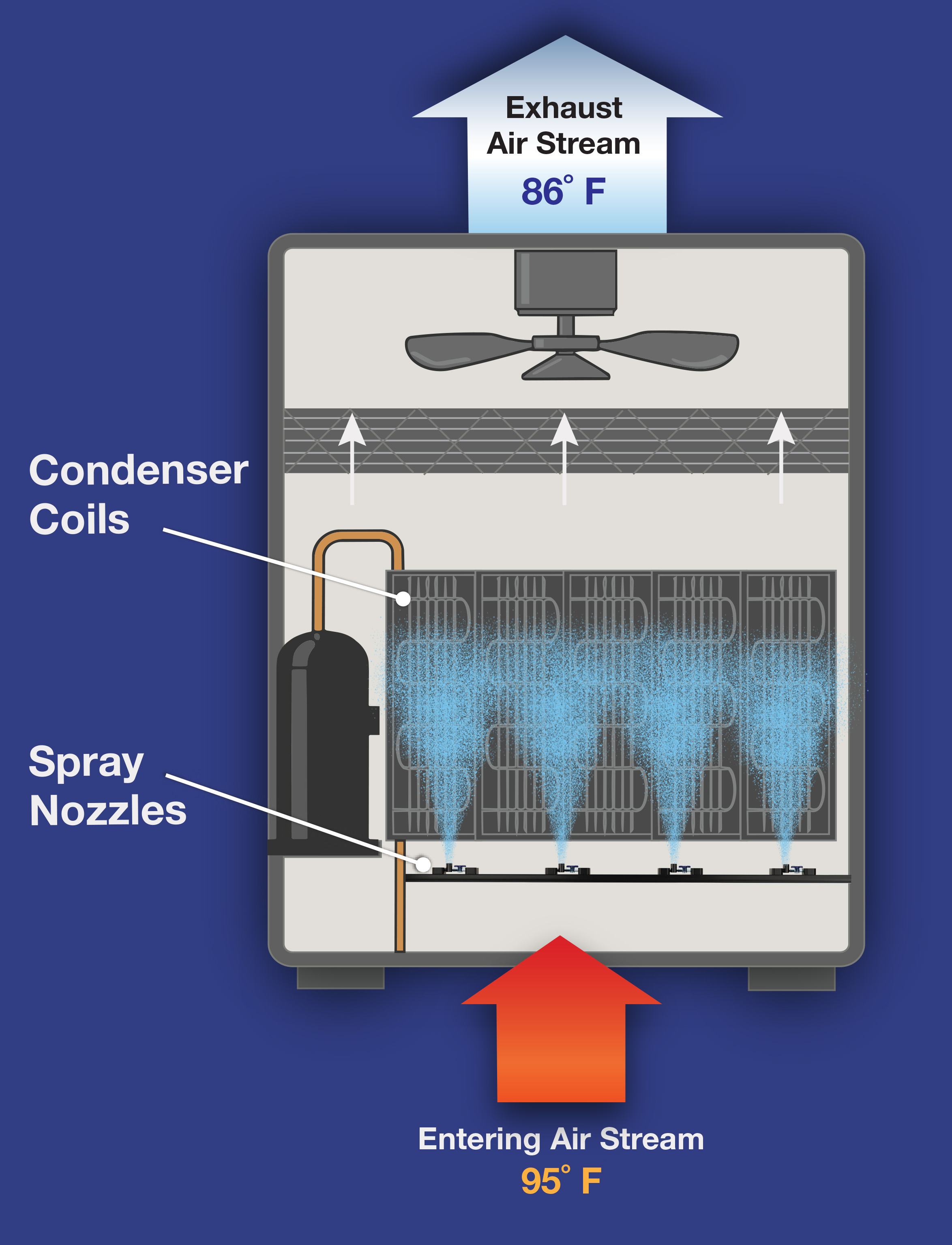
Evaporative pre-cooling works by reducing the temperature of the air before it reaches the condenser coils, making it easier for the refrigeration system to expel hot air. In typical air-cooled systems, the hotter the incoming air, the harder the condenser must work to expel heat from the refrigerant. By spraying a fine water mist into the incoming air stream, the water evaporates and absorbs heat from the air, pre-cooling the intake air. There are four key concepts of evaporative pre-cooling:
1. Heat Absorption Through Evaporation
When fine mist particles evaporate into the surrounding air, they capture latent heat from that air, changing from liquid to vapor. Incoming hot air gives up heat, causing water to evaporate and resulting in cooler, moister air. This evaporation absorbs heat from the air, reducing the condenser’s workload.
2. The Impact of Cooler Intake Air on System Performance
Cooler intake air enables compressors to operate at lower pressures and temperatures. When air entering the condenser has been pre-cooled through evaporation, the temperature differential the system needs to overcome is smaller. This process reduces compressor workload, cuts energy consumption, and enhances system performance.
3. Balance Humidity and Cooling Efficiency
While evaporative pre-cooling provides temperature benefits, systems must be designed to balance moisture levels. If not managed properly, excessive humidity can lead to condensation on components, promote corrosion, and reduce heat-transfer efficiency. Effective pre-cooling systems often incorporate controls to adjust water flow based on ambient humidity and air temperature so that the moisture added to the air improves cooling without creating operational problems.
4. Importance of Nozzle Design and Droplet Size
Nozzle design and droplet size play a crucial role in evaporative pre-cooling performance. Spraying fine water droplets increases the surface area available for evaporation and promotes rapid phase change. If droplets are too large, they fail to evaporate quickly and can simply fall to the ground or wet surfaces without contributing to cooling. If droplets are too small, they may evaporate prematurely before reaching the intended airflow. Proper nozzle selection ensures consistent mist coverage, efficient heat exchange with the air stream, and optimal use of water resources.
The Challenge: Maintenance and Correct System Setup Are Critical to Maintaining Efficiency:
Poorly maintained spray nozzles, scaling on coils, or undersized systems can erode gains over time, reducing the real-world improvement below laboratory best-case numbers.
The Proof: Experimental Results from Studies on Evaporative Pre-Cooling
A growing body of laboratory and field research demonstrates that evaporative pre-cooling of condenser intake air can lead to meaningful energy and performance improvements under the right conditions.
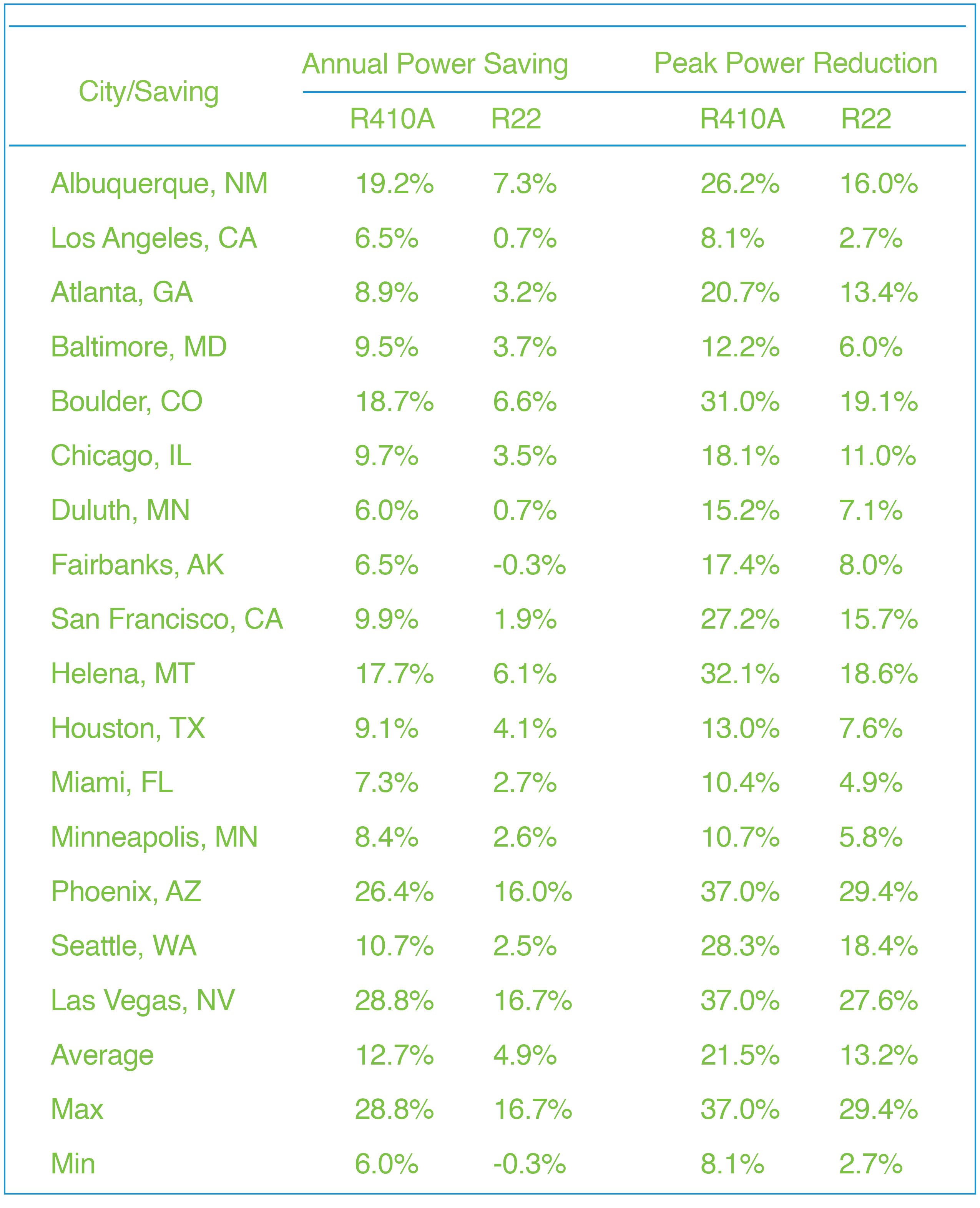
- A detailed field study by Oak Ridge National Laboratory assessed condenser evaporative pre-cooling across multiple building types (including supermarkets) and across various climate zones. It found that use of commercially available evaporative pre-coolers resulted in significant reductions in energy consumption and peak demand. The study reported that savings were greatest in hot, dry climates with annual energy savings of up to 26%, and reported peak power reductions of up to 39% in Las Vegas, NV. However, even in more temperate climates such as Chicago, IL, savings of around 10% annually were achieved.
- A U.S. Department of Energy study revealed that evaporative condensers significantly cut both annual cooling energy use and peak demand across diverse climates. Backed by modeling and field data, the findings highlight energy savings of up to 27% and demand reductions exceeding 30%, with the most substantial performance gains occurring in hot, dry environments.
- Comparative research showed that refrigeration systems employing evaporative condensers outperformed purely air-cooled systems. One study found that evaporative condenser units delivered ~31% higher refrigeration capacity and ~14% higher COP (coefficient of performance) than standard air-cooled condensers under the same conditions.
Using Evaporative Cooling Brings Cost Savings for Retailers
For grocery and retail stores, energy efficiency has a direct and measurable impact on operating costs. By lowering the temperature of air entering refrigeration and cooling equipment, evaporative cooling reduces overall energy consumption. This translates into lower electricity bills and helps reduce peak demand charges, which can account for a significant portion of monthly energy costs in food retail environments.
Reduced thermal stress on compressors and condensers also delivers long-term financial benefits. When equipment operates under lower pressures and temperatures, components experience less wear and tear. Over time, this extends equipment lifespan and lowers the frequency of service calls.
Preventing Dehydration and Spoilage
As energy prices climb, the financial return on evaporative cooling is often eroded by the hidden costs of mineral buildup. These savings are only sustainable if scaling is proactively managed; otherwise, the efficiency tax caused by clogged nozzles and overworked compressors quickly eats into the bottom line. In produce misting systems, preventing scale does more than just lower the immediate utility bill; it secures the long-term viability of the cooling strategy.
Maintaining clear spray patterns and optimal heat transfer allows facility managers to transform their misting infrastructure from a high-maintenance liability into a high-performance asset. The real value is found in the compounding effect of consistent energy reductions, extended equipment lifespan, and the elimination of emergency service calls that typically plague scaled systems during peak cooling seasons.
The Prodew Advantage: Cool Efficiency, Real Results
Evaporative cooling for condensers represents a practical, proven way for retailers to reduce energy consumption and operational costs. Prodew’s misting and humidification systems use the same evaporative principle to enhance performance, whether they’re keeping produce fresh or optimizing condenser cooling. When fogging is used in the produce department to keep the produce fresh, some of the fog evaporates which creates additional cooling in the case, which in turn saves energy.
Beyond display-case misting, Prodew also manufactures specialized systems designed to pre-chill the intake air for rooftop condenser units. Designed for durability and streamlined maintenance, these systems enable retailers to cultivate more efficient, sustainable environments across every department. By integrating smart misting technology, facilities can significantly extend the operational life of their compressors, slash peak utility costs, and meaningfully reduce their total environmental footprint.
While scaling is a common industry concern, Prodew’s design philosophy prioritizes mineral management to ensure consistent performance. The systems generate ultra-fine droplets calibrated to evaporate before they ever make contact with the condenser coils, preventing direct scale buildup on heat-transfer surfaces. Prodew also uses a suite of proprietary advantages to eliminate clogging: They are engineered to adapt to diverse condenser configurations, operate efficiently at low pressure, and feature specialized plastic nozzles that naturally resist the mineral adhesion that typically plagues standard metal components.
Ready to experience smarter cooling? Discover how Prodew solutions make every drop count.
If you found this article helpful please share it with your social media channels.
About
Prodew is the leading manufacturer of perishable control equipment for supermarkets and food storage facilities.
We offer misting systems for fruit, vegetable and seafood displays, as well as display case humidity systems for produce, meat, seafood, mushroom, delicatessen and flower displays.
Prodew has over 30 years of experience in the design, manufacturing and sales of misting and humidity equipment for the retail and post-harvest industries. We are dedicated to manufacturing the highest quality products at the most competitive prices.
We control more than 80% of the market share in the USA and is the world-leader in the produce misting industry. Look below to discover how we can help your company extend the shelf life of your perishables and maintain the freshness of your products.

Products
Misting
Humidification
Night Covers
Ice Melting
Water Solutions
Industries
Retail
Storage
Transportation
Agriculture
Other Industries
Service
Blog
Contact
Hours:
M-F 8:00 – 5:00 (except holidays)
Headquarters - USA
1359 Gresham Road, Marietta, Georgia 30062
Phone:
770-420-3060
Email:
sales@prodew.com
find us on:


