
Water Filtration in Retail: Why It Matters for Freshness and Safety
August 05, 2026
Walk into any well-run grocery store, and the produce glistens, the seafood sparkles, and the deli case looks spotless. What most shoppers never think about is the water making all of that possible. Misting and humidity systems are essential tools for preserving freshness across departments, but they are only as effective as the quality of water running through them.
Tap water — the default source for most stores — carries dissolved minerals, chlorine, and other contaminants that can quietly undermine product quality, damage equipment, and create food safety risks, so water filtration in retail environments is no longer an optional upgrade. It’s a foundational part of running a safe, profitable fresh department, one that touches everything from nozzle performance to shopper trust. This article breaks down why water quality deserves the same attention retailers already give to temperature and humidity control.
4 Hidden Risks of Untreated Tap Water in Misting Systems
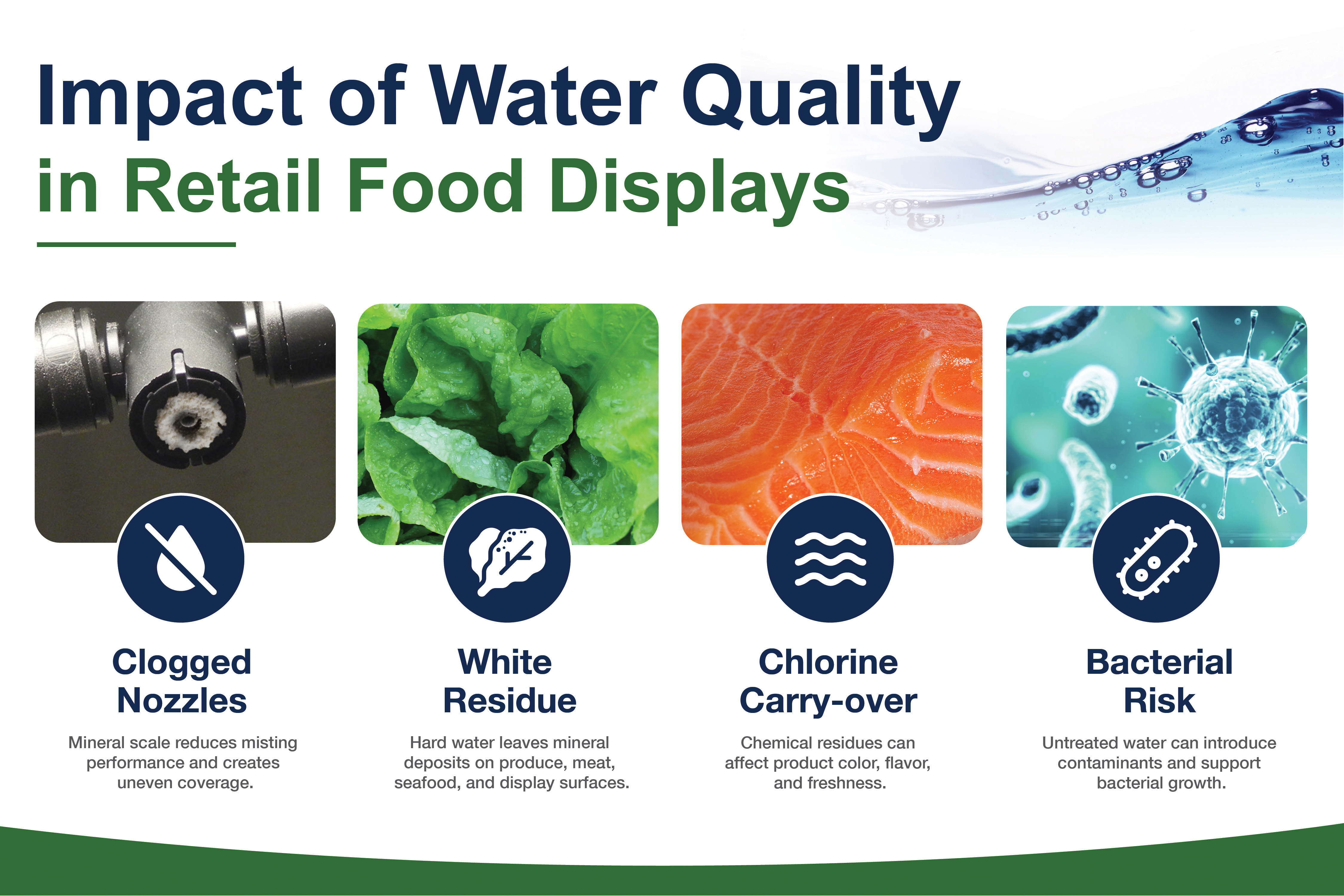
Water behaves differently once it becomes the primary hydration source for a display case, atomized into fine droplets and sprayed directly onto exposed produce, meat, or seafood dozens of times a day. The biggest variable in that water is hardness (the concentration of dissolved calcium and magnesium), which varies widely by region and can even shift seasonally within the same store. That variability is where most of the risk starts. Four categories tend to surface most often, and they compound one another over time.
1. Mineral Scale and Clogging
Misting nozzles are engineered with orifices measured in microns, so it takes very little mineral buildup to change how they perform. Calcium deposits narrow these openings gradually, leading to uneven coverage, dry spots on products, and unplanned maintenance calls that pull technicians away from other priorities.
2. White Residue On Products and Surfaces
Hard water leaves behind a fine white film on produce, meat, and seafood, and the same residue shows up on shelves, case fronts, and mirrors, often as a white powder buildup on meat specifically. Shoppers read that film as a sign of poor quality even when the product underneath it is perfectly fresh.
3. Chlorine and Chemical Carry-Over
Municipal tap water is treated with chlorine or chloramines to keep it safe in transit, which makes it a poor fit for direct contact with fresh food. Leafy greens and seafood are especially vulnerable, so repeated misting cycles without purified water can affect flavor and accelerate the spoilage the system is meant to prevent. This is a process known as bleaching and causes discoloration.
4. Bacterial Risk
Tap water can pick up contaminants as it travels through aging plumbing. Left untreated, that same water can also elevate the risk of bacterial growth, particularly when it’s allowed to sit stagnant in warm, humid retail conditions.
Foodborne illness is a significant concern for the industry. The CDC estimates an average of 48 million illnesses and 128,000 hospitalizations due to foodborne pathogens each year in the United States. That is a reminder that water hygiene at the point of product contact is not a minor detail; it is part of the food safety chain for which every retailer is responsible. For retailers, these risks translate into more frequent equipment servicing, higher shrink rates, and displays that make a poor impression.
Why Water Quality Matters Most in Meat, Seafood, and Deli
Filtered water misting protects the departments where food safety and appearance matter most. In meat cases, RO-purified humidity preserves natural color and prevents mineral residue from dulling the display and creating a white residue on the meat.
In seafood, it maintains gloss and slows spoilage without chemical carry-over. In the deli, where ready-to-eat products are directly exposed, clean water matters just as much, though for a different reason. There’s no cooking step left to neutralize anything the water leaves behind. Across every one of these departments, how water quality affects meat, seafood, and deli displays comes down to the same fundamentals: fewer minerals, fewer chemical residues, and fewer opportunities for bacteria to take hold.
Water quality's influence reaches well beyond the display case. A 2025 study on romaine lettuce contamination found that treating water at its source was the single most effective way to cut E. coli risk, reducing it by up to 96% compared with postharvest interventions like washing. The study focused on irrigation water rather than retail misting, but the underlying lesson still applies at the store level: the earlier water quality is controlled in the chain, the less risk carries through to the product a customer eventually picks up.
Regulatory and Safety Advantages
Food safety regulations for retail environments are growing more detailed and are being enforced more strictly. Water quality in direct-contact applications, such as misting systems that spray onto exposed food, is coming under increasing scrutiny.
- HACCP alignment: Retailers operating under Hazard Analysis and Critical Control Points frameworks benefit from RO filtration as a documented control measure for water quality at the point of product contact.
- Approved source requirements: The FDA Food Code requires that water used in a food establishment must come from an approved source that meets drinking water standards. A documented filtration system helps retailers demonstrate that the standard is consistently met.
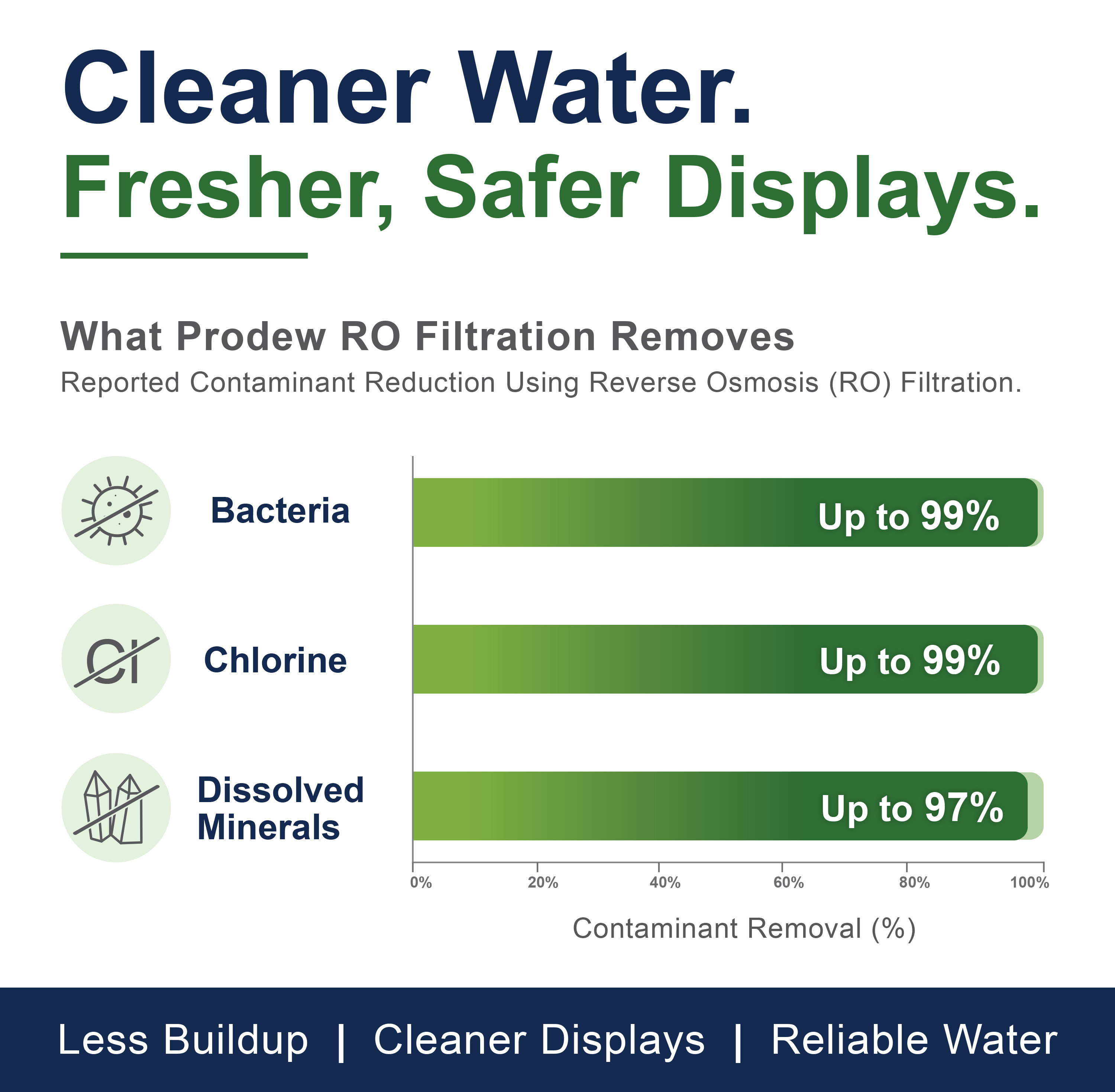
- Bacterial contamination prevention: Prodew's reverse osmosis systems remove up to 99% of bacteria and chlorine and 97% of dissolved minerals, significantly reducing the risk of pathogens reaching exposed perishables.
- Audit-ready displays: Cases with no white mineral residue are easier to inspect and signal a high standard of hygiene to health inspectors.
- Avoiding liability: Waterborne contamination traced back to a misting system can result in costly recalls, fines, and reputational damage. Filtration is a proactive investment in risk management.
How Prodew Solves Water Quality and Safety Issues in Fresh Retail
Every risk covered in this article — clogged nozzles, mineral residue, chlorine carry-over, and bacterial growth — traces back to the same root cause: untreated water. Retailers don't need a different fix for each problem. They need one system built to solve all of them at once.
Prodew's Reverse Osmosis systems remove up to 99 percent of bacteria and chlorine and 97 percent of dissolved minerals before water ever reaches a nozzle, addressing the chlorine, chemical, and bacterial risks in a single step while keeping produce, meat, and seafood free of residue. Pairing RO with NeutraScale Anti-Scalant protects the investment retailers have already made in their misting and humidity systems: nozzles engineered for years of service can fail within months when scale builds unchecked, and NeutraScale stops that scale from forming in the first place, keeping nozzles clear, protecting pipes, and cutting down on unplanned service calls.
The result is a system that delivers clean, consistent hydration and is purpose-built for retail grocery environments, from a single display case to a full-store installation. That reliability shows up where shoppers can see it too: color, gloss, texture, and the confidence they place in your fresh department every time they walk through the door. Ready to make every drop count? Contact a Prodew specialist to find the right filtration solution for your store.
If you found this article helpful, feel free to share it with your team.
About
Prodew is the leading manufacturer of perishable control equipment for supermarkets and food storage facilities.
We offer misting systems for fruit, vegetable and seafood displays, as well as display case humidity systems for produce, meat, seafood, mushroom, delicatessen and flower displays.
Prodew has over 30 years of experience in the design, manufacturing and sales of misting and humidity equipment for the retail and post-harvest industries. We are dedicated to manufacturing the highest quality products at the most competitive prices.
We control more than 80% of the market share in the USA and is the world-leader in the produce misting industry. Look below to discover how we can help your company extend the shelf life of your perishables and maintain the freshness of your products.

Products
Misting
Humidification
Night Covers
Ice Melting
Water Solutions
Industries
Retail
Storage
Transportation
Agriculture
Other Industries
Service
Blog
Contact
Hours:
M-F 8:00 – 5:00 (except holidays)
Headquarters - USA
1359 Gresham Road, Marietta, Georgia 30062
Phone:
770-420-3060
Email:
sales@prodew.com
find us on:


